ceramic 2
Available nodes | Ceramic Developers
To build an application on Ceramic, you don't necessarily have to run your own node. The community provides a set of nodes that can be used for application testing and development. These nodes are periodically wiped, so don't depend on them for long-term data availability.
 https://developers.ceramic.network/run/nodes/available/
How to Host a Ceramic Node Using Decentralized Storage
The Ceramic network is a decentralized network for building applications with composable data on Web3. Ceramic makes building apps as easy as browsing a marketplace of data models, selecting one to use in your app, then updating your app with your selected data model and its data.
 https://coinsbench.com/how-to-host-a-ceramic-node-using-decentralized-storage-9bf5b4e8af10
IDX: A Devkit for Open Identity
IDX is a brand new SDK for building with decentralized identity and user-centric data from the 3Box Labs team. IDX is in alpha but if you'd like to start experimenting, join our discord and jump into the docs . The Web3 vision for an internet that is open and interoperable, where users control their information requires a decentralized, cross-platform identity system.
 https://medium.com/3box/idx-a-devkit-for-open-identity-48edc88e8e85
Home
OrbitDB is a serverless, distributed, peer-to-peer database. OrbitDB uses IPFS as its data storage and IPFS Pubsub to automatically sync databases with peers. It's an eventually consistent database that uses CRDTs for conflict-free database merges making OrbitDB an excellent choice for decentralized apps (dApps), blockchain applications and offline-first web applications.
 https://orbitdb.org/
How to build a simple notes app with IDX
IDX is a protocol for building applications with user-centric, interoperable data. In a previous post, we described what IDX is and the benefits of building applications in this way. This tutorial will walk through the creation of a simple note-taking web app using decentralized technologies for authentication and data storage, allowing users to have complete ownership over their contents.
 https://blog.ceramic.network/how-to-build-a-simple-notes-app-with-idx/
Writing records | IDX Developers
Use the method to create or modify a record at runtime. Writing to records requires having an authenticated user. All writes will be performed by that user and applied to their records. Pass an alias from default aliases and the data that you wish to write to the record.
 https://developers.idx.xyz/build/writing/
3ID DID | Ceramic Developers
The 3ID DID libraries provide support for the did:3 method as a Ceramic account, which notably uses Ceramic to store DID documents as Ceramic streams, enabling features such as supporting multiple authentication keys and rotating these keys.
https://developers.ceramic.network/reference/accounts/3id-did/React module | Ceramic Developers
React hooks and utilities for authentication and records interactions. The react module provides React components, hooks and related utility functions to help manage authentication and interactions with records, similar to the module but designed specifically to be used with React.
https://developers.ceramic.network/reference/self-id/modules/react/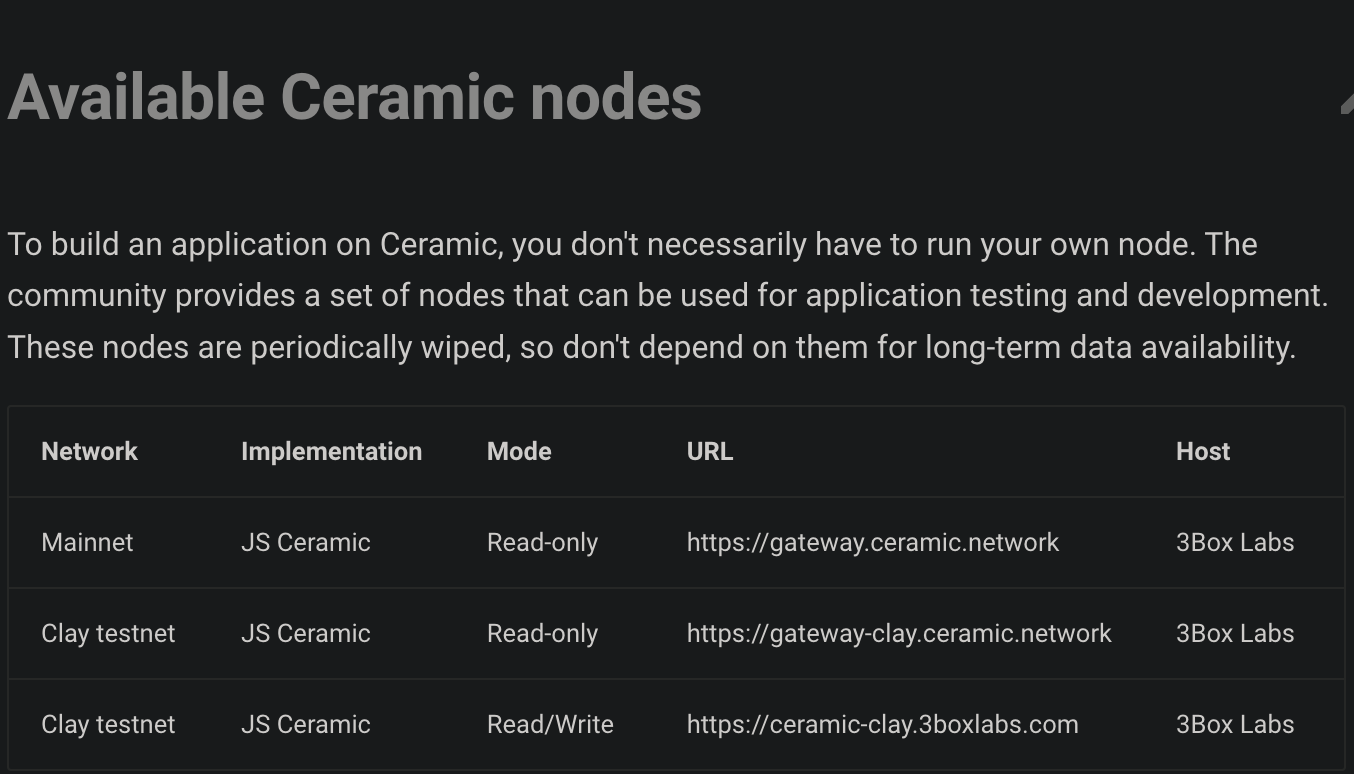
How to store signed and encrypted data on IPFS
Storing authenticated and encrypted data on IPFS is a core building block for many Web3 applications, but to date there has not been a standardized way to encode this type of data. Without a standard, many developers have been forced to create custom formats for their signed and encrypted data.
https://blog.ceramic.network/how-to-store-signed-and-encrypted-data-on-ipfs/
Tiles
Browse Ceramic Documents
The next architecture for building Web3 data apps
The Ceramic community is committed to providing the best possible developer experience for building Web3 data applications. Over the past few months, the community has made significant upgrades to Ceramic's emerging open source developer tools and data standards ecosystem, including replacing the popular IDX.js client with a more powerful and flexible set of tools.
https://blog.ceramic.network/the-next-architecture-for-building-web3-data-applications/
https://github.com/hollygrimm/idx-ceramic-todos
Storage DApp using Solidity and IPFS
Imagine a decentralized storage application where we share our disks to each other without any server in the middle. Imagine now, that each file in this decentralized application can be easily shared and found with a simple hash. Sounds promising right? well, that's a project in progress at this very moment and I'm going to explain how it works.
 https://itnext.io/storage-dapp-using-solidity-and-ipfs-62cf371b77dc